Since 1999, Laguna’s Indian Arts Center has shared Pueblo crafts and food with Route 66 travelers.
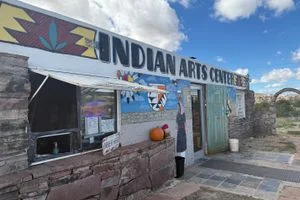
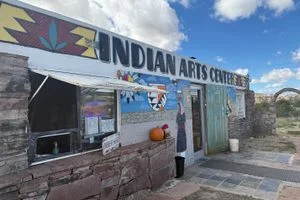
Laguna Pueblo craft and food meet at the Indian Arts Center, a small, colorful stop just outside Albuquerque on historic Route 66. The center sells pottery, textiles, jewelry, and other handmade work by Laguna Pueblo artists. Owner Dominick Quiroz also serves Indian tacos and fry bread with sweet toppings. The combination gives the place two roles: it’s a place to buy work made by local artists, and a roadside stop where visitors can encounter food associated with Indigenous communities.
That pairing matters. Craft and cooking can carry cultural meaning that a quick visit won’t fully convey, but they offer tangible points of entry for travelers passing through. The center’s setting on a well-known highway brings people into contact with Laguna Pueblo work who might otherwise pass through the area without stopping. A small business can’t represent an entire community, of course; its value lies in the specific work and welcome it offers.
A family effort to share Laguna Pueblo culture
Quiroz’s father founded the center in 1999 to preserve and celebrate Laguna Pueblo traditions. The community’s own name is Kawaika, or “lake people”; “Laguna,” meaning “little lake,” came later with Spanish colonization. That distinction points to a broader history of how place names can reflect different languages and periods of outside influence. For visitors, learning the community’s own name is a useful reminder that the familiar label on a map may not tell the whole story.
The family’s stated aim is preservation as well as celebration. In practice, a center like this can support that aim by giving artists a place to present and sell their work, while making cultural objects visible to people who may be encountering them for the first time. Pottery, textiles, and jewelry aren’t interchangeable souvenirs; each handmade piece reflects choices about materials, form, and technique. The center’s role is to connect those objects with their makers and community, rather than leave them as anonymous decorations.
That relationship is easy to overlook when a visitor is focused on the next stretch of road. But the person selling a piece can give it context that a shelf label alone can’t provide. A stop at the center may be brief; the exchange can still change how a traveler thinks about the object and the people whose work produced it.
In 2023, the center received a Certificate of Special Congressional Recognition for its long-running cultural work and for introducing visitors to Laguna Pueblo traditions. The recognition acknowledges the center’s public-facing role, though an award can’t capture the full measure of cultural preservation. That work depends on people continuing to make, share, and value traditions over time. The recognition is a marker of attention, not a substitute for the daily effort behind it.
Craft, food, and the roadside visit
Food gives the center another way to welcome travelers. Quiroz serves Indian tacos and fry bread with sweet toppings, dishes that make the visit more than a browsing stop. The source describes what’s available but doesn’t offer a menu, prices, or details about preparation, so visitors shouldn’t assume every option is served at every moment. Still, the presence of both savory and sweet food alongside handmade work creates a more rounded introduction to the center.
Fry bread has a place in many Indigenous food traditions, though recipes and meanings vary among communities and families. It’s best understood here through the specific offering the center makes, rather than as a single dish that can stand in for every Native community. The same care applies to the art: Laguna Pueblo work belongs to its own makers and context. A visitor who keeps that distinction in mind will get more from the stop.
And this is the part most people overlook: the commercial side and the cultural purpose aren’t separate by default. Sales can help sustain a place where artists’ work is shown and where travelers can learn something about Laguna Pueblo traditions. But buying an item alone doesn’t make a visitor an expert. Attention, questions asked with respect, and recognition of the artists’ own authorship matter too.
Finding the center
Route 66 signs near Exit 114 point travelers toward “FRY BREAD.” Follow them around the roundabout to the welcome flag and signs for local pottery and fry bread. The stop offers a direct way to encounter Laguna Pueblo craft and cooking along the route. Because the directions rely on roadside signs, travelers should watch for them as they approach rather than expect a large destination complex to announce itself.
The instructions also make the center part of the drive, not a detour requiring a separate itinerary. That accessibility is useful for people passing through, while the signs for pottery and food give a clearer sense of what awaits than a generic highway attraction would. If you’re working your way along Route 66, the center offers a chance to pause and spend time with work tied to the place you’re visiting.
A roadside stop has limits: visitors may have little time, and a short conversation can’t cover the full history of Laguna Pueblo. Even so, a focused encounter can be a good beginning. The useful question isn’t whether one visit tells the whole story. It’s whether the visit leaves you more attentive to the artists, names, and traditions that were already there.
Why the center’s approach matters
The Indian Arts Center’s significance comes from connecting cultural visibility with a working local business. Travelers see handmade pieces, can meet the setting in which they’re offered, and have the option of sharing food at the same stop. This is more significant than it looks: the center makes Laguna Pueblo culture present along a route often treated simply as a way to get somewhere else.
That said, visitors should resist turning one business into a summary of an entire people. The center presents a particular family effort and the work of Laguna Pueblo artists; it can introduce traditions without claiming to contain them all. The distinction is small but important. A respectful visit starts with curiosity and leaves room for what a single stop can’t explain.
For the center’s future, the basic challenge is also the practical one facing many small cultural businesses: maintaining a welcoming place where artists’ work and local food can reach visitors. The source gives no details about expansion plans or future changes, so there’s no basis for predicting what comes next. What’s clear is the model already in view: a family-founded center, handmade work by Laguna Pueblo artists, and food served beside a historic travel route.
A modest stop, with a wider story behind it.
Discussion
Sign in to join the discussion.