Discover La Ribota Park in Alcorcón, where classical mythology meets nature through stunning sculptures of the solar system’s deities.
A Surprising Encounter with Mythology
In the heart of Alcorcón, just outside Madrid, La Ribota Park offers an unexpected blend of nature and classical mythology. Known primarily for its residential areas and shopping hubs, Alcorcón has turned a simple park into a tribute to the gods of Olympus, cleverly incorporating a solar system within its landscape. This is more significant than it looks at first glance; parks are often reduced to simple green spaces, but here, the integration of mythology provides a unique storytelling layer that invites visitors to reflect on both art and science.
The Solar System in Sculpture
Nestled on the southern edge of the city, La Ribota Park is an inviting green space for locals seeking a retreat from urban life. At the park's core lies a magnificent fountain dedicated to Apollo, symbolizing the sun. This choice is fitting, given Apollo's association with light and truth. Surrounding this centerpiece are smaller fountains featuring other deities, creating a fascinating path that mimics planetary orbits. The design isn't just ornamental; it positions art in a way that encourages visitors to appreciate the celestial mechanics that govern our world. You could argue that such installations serve as educational tools, sparking curiosity about both mythology and astronomy.
Exploring the Pantheon
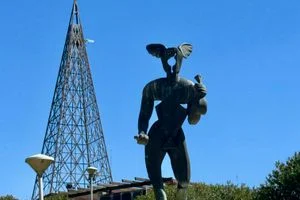
Visitors to the park can discover Mercury, the swift messenger; Venus, the goddess of love; and Gea, personifying Earth. They’re joined by Mars, Jupiter, Saturn, Uranus, Neptune, and even Pluto—each figure represented by sculptures created by artist Ángel Aragonés. His style maintains a simplified yet recognizable form, making each figure distinct and accessible, akin to pages ripped from a classical mythology book. It’s interesting how sculpture can democratize complex narratives; rather than requiring prior knowledge of mythology, the physical representations invite even the most casual onlooker to engage. This park transcends mere public space; it acts as an open-air gallery that educates and entertains simultaneously.
Pluto's Continued Legacy
Notably, Pluto remains a significant figure here despite its reclassification as a "dwarf planet" by the International Astronomical Union in 2006. La Ribota Park keeps Pluto among its celestial peers, illustrating the ongoing debate surrounding its status and acknowledging its rightful place within the solar system. Pluto’s portrayal reminds us that even scientific classifications can be contentious and laden with emotional resonance—many still regard it as a planet in popular culture. This dual status suggests a cultural dimension to celestial bodies, where mythology and science overlap, echoing larger themes about how humanity navigates change and uncertainty.
A Dynamic Atmosphere
The ambiance of the park shifts dramatically as day turns to night. The setting sun casts dynamic shadows on the sculptures and fountains, enhancing the ethereal experience of wandering through this unique commingling of art, nature, and mythology. As dusk approaches, the park transforms, morphing from a place of active exploration to a more introspective environment. This daily shift invites visitors to consider how their perceptions are influenced by changing light and mood. What this means for you is that a trip to La Ribota Park may yield different experiences depending on the time of day, provoking new thoughts and feelings with each visit.
Implications and Future Outlook
The integration of mythology in public sculptures like those at La Ribota Park raises interesting questions about public art's role in urban settings. As more cities explore similar concepts, there’s potential for a renaissance of public spaces that educate and engage communities. Such efforts often reflect a shift in societal perspective on art, moving from a passive viewing experience to one that actively invites participation and inquiry. As urban planners consider how to enhance community spaces, incorporating educational elements through art could become a rising trend. These installations can serve as focal points for cultural discourse, potentially fostering community identities that celebrate both artistic heritage and contemporary scientific thought.



Discussion
Sign in to join the discussion.