The Red Tank Historical Park commemorates victims of the early 1970s killings and serves as a community learning center in Phatthalung.
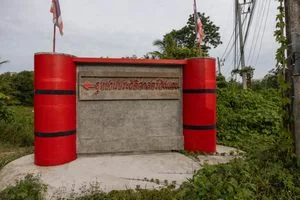
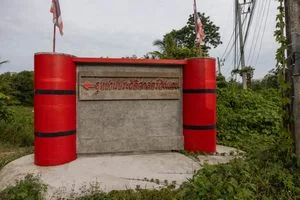
The Red Tank Historical Park in Lamsin, Phatthalung, gives a physical address to a history that remains little known beyond southern Thailand. From 1971 to 1973, suspected members of the Communist Party of Thailand (CPT), along with people accused of helping the group, were killed in red petroleum drums during a campaign against areas labeled strongholds of the “Red Insurgency.” The name of the park points to the method used, but the site’s purpose extends beyond identifying a weapon. It asks visitors to connect state violence with the lives of the people who were caught up in it.
That connection matters because the labels used during a conflict can shape how later generations understand its victims. Being suspected of CPT membership, or accused of assistance, is not the same as a record of proven involvement. The account presented at the park makes that distinction hard to ignore. A place of remembrance can preserve evidence of violence while also making clear how broad suspicion can expose people to punishment.
A memorial built around the evidence
More than 200 people were killed near the present memorial, according to the account presented at the site. Across all affected districts and provinces, the reported total was 3,008. The operations were attributed to state actors believed to be part of the Communist Suppression Operations Command (CSOC). Those figures put the local memorial in a wider frame: the killings near Lamsin were part of a campaign that reached beyond one community.
The numbers also carry a limit. They describe the scale reported at the site, but they can't, on their own, convey what was done to each person or what families lost. That work falls partly to the memorial’s physical details and to the accounts preserved there. For visitors, the difference between a total and an individual life is central to understanding why remembrance needs more than a plaque.
The killings followed a repeated pattern. People were arrested and questioned, then rendered unconscious before being placed in 200-liter drums. Some were already dead; others regained consciousness as they burned. Officials reportedly started truck engines to mask their cries, and remains were later discarded in a nearby canal. In some cases, victims were beaten and burned without interrogation.
The sequence matters because it describes an organized method, not a single act of violence. Arrest, questioning, concealment, and disposal each served a role in making the killings possible and hiding what had happened. The account is difficult to read, but softening it would make the memorial’s subject harder to grasp. A visitor doesn't need a technical explanation of the conflict to understand the human consequences of these choices.
The drums had an iron grille inside. Victims were placed on it while gasoline, typically about 20 liters, pooled below and fueled the fire. The barrels also concealed evidence and could be used again; the smell of fuel masked the odor of the bodies. Here’s the thing: the drum was both an instrument of killing and a means of concealment. A familiar industrial object became part of a system designed to make violence less visible.
More than a description of equipment. The object gives visitors something concrete to consider when official records, family memories, or public discussion leave gaps. The memorial’s use of a red drum refuses to let the method fade into abstraction. This is more significant than it looks: an object associated with an atrocity can make the process of remembering immediate, even when the wider history remains unfamiliar.
From remembrance to public history
Built in 1980, the Red Barrel Memorial—also called the Thang Daeng Memorial—followed the start of reconciliation, when CPT members were allowed to return home. Relatives of those killed sought a merit-making ceremony for the dead, prompting the proposal for a permanent monument near a former temporary military camp. The memorial therefore began with a community’s effort to honor its dead, at a place connected to the period being remembered.
That origin gives the site a personal dimension alongside its public one. A ceremony for the dead responds to grief and family memory; a permanent monument makes that remembrance visible to people who weren't there. The two purposes can sit together without being identical. One speaks to relatives, while the other asks a broader audience to take responsibility for knowing what happened.
A red petroleum drum anchors the memorial’s design. The structure rises on a platform engraved with victims’ names and incorporates objects associated with the executions. Its Thai-language inscription urges the community to treat the Red Barrel incident as a lesson against extrajudicial violence in Thai society. Names change the scale of the story again. They resist the temptation to see the reported total only as a statistic.
The inscription also frames the memorial as a warning about violence carried out outside lawful process. That message is direct, though its force depends on visitors understanding the history behind it. A monument can't settle every question about responsibility or repair. It can preserve a public place for those questions, and make forgetting less convenient.
A living site, with limits
The site now serves a wider purpose as the Red Tank Historical Park, named on the red sign beside Highway 4122. It presents the killings alongside local community life, the struggle for justice and lessons on the philosophy of sufficiency economy. Homestays can be arranged through the Sin Phra Thong network group, and the park can be visited at any time; it has no set opening hours. Its role as a learning center keeps the memorial connected to the living community around it.
That wider role gives the park a different character from a monument visited only for a ceremony. Connecting difficult history with community life can help visitors see remembrance as part of a place’s present, rather than an episode sealed off in the past. And yet, that approach places a responsibility on the site: the historical account must remain clear even as the park welcomes visitors for other reasons.
If you're working in this space, the park offers a useful reminder that local history sites depend on more than a striking object or a summary of events. They also need context that helps people understand who was targeted, how the violence was carried out, and why the community chose to mark it. (And this is the part most people overlook.) Access matters too: the park’s lack of set opening hours and the possibility of arranging a homestay connect a visit to the community that maintains the memory.
The site’s significance lies in holding these elements together: names, a specific method of killing, a history of political conflict, and a continuing appeal against extrajudicial violence. That doesn't make the account complete, or the history easy. It does make the Red Tank Historical Park a place where visitors can encounter the evidence and consider what public remembrance asks of them.


Discussion
Sign in to join the discussion.