The founder of the Orient Express rests in a family tomb in Liège. His path to the famous route ran through failed plans, financial setbacks and unlikely allies.
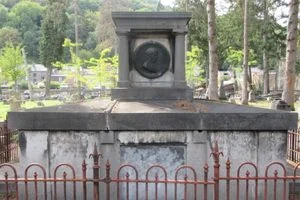
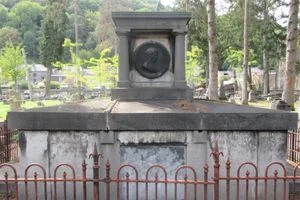
A modest cemetery in Angleur holds the remains of Georges Nagelmackers, the Belgian engineer and industrialist behind the Compagnie Internationale des Wagons-Lits and the original Orient Express. The contrast is striking: a family tomb in a residential corner of Liège marks the final stop for a figure whose rail route became a legend. His work began with a practical question: how could overnight rail travel feel less like enduring a journey and more like being carried through it? The answer required more than a carriage design. It meant arranging money, political backing and commercial partnerships across borders.
Nagelmackers’ story also complicates the familiar image of the Orient Express as an instant symbol of luxury. The famous route emerged from experiments, setbacks and negotiations, each shaped by the limits of railway travel in its time. The train’s later reputation can obscure that less glamorous beginning: a business effort to make long-distance travel more comfortable and dependable.
A railway idea formed abroad
Nagelmackers’ route to the sleeping car began with a family dispute. In 1867, after he said he wanted to marry his cousin, his father sent him to the United States. The trip became an education in a developing form of rail travel. Nagelmackers studied George Pullman’s night trains and sought passenger feedback, looking for ways to improve the experience. Watching how people used the carriages gave him a practical basis for his plans: comfort depended on how the service worked as a whole, not simply on adding a bed.
Back in Belgium, family duties took precedence. He was put in charge of the family’s blast furnaces and mine, but kept developing his railway plans. That split between industrial responsibility and railway ambition mattered. His ideas had to compete for attention and funding with established family business, while the railway project itself depended on cooperation beyond his immediate circle.
In April 1870, he published a brochure that used the term “wagon-lit” for sleeping carriages. The proposal gave a name to an idea that still needed a business capable of putting it into practice. The Franco-Prussian War broke out that July, halting progress, while his family’s opposition cut off his financial support. A promising concept, in other words, could be stalled by events and by the people holding the purse strings.
King Leopold II later helped Nagelmackers get a prototype sleeper carriage running between Paris and Vienna in November 1872. Its first journey succeeded, but money troubles soon returned. That early success showed that the concept could work on a route, but a demonstration wasn’t the same as a sustainable service. Nagelmackers still needed capital and partners prepared to make the carriage part of a wider commercial operation.
From sleeper carriage to express route
While seeking funds in London, Nagelmackers met American Colonel William D’Alton Mann, whose patented sleeping carriage had also struggled to find a market. Their meeting joined two related efforts that had each faced commercial resistance. They formed Mann’s Sleeping Carriage Company on 4 January 1873. Their design placed compartments along a side corridor, with toilets at the end of the carriage, an arrangement still found in sleeper trains. That layout made the carriage easier to navigate and gave passengers a degree of separation from the shared passage.
Mann secured a high-profile passenger: the Prince of Wales, later King George V, travelled in one of the carriages to his brother’s wedding in Saint Petersburg. The attention helped the company gain an initial foothold. A prominent passenger could make the service visible to people who might otherwise have regarded a sleeper carriage as an untested idea. Publicity helped open a door, though it couldn’t resolve the harder question of how to keep the service funded and running.
On 4 December 1876, the partners created the International Sleeping Car and European Express Company. Leopold II had contributed money, and the company’s logo reflected that support with the two lions from Belgium’s national coat of arms. The company represented a step beyond a single prototype or carriage: it gave the sleeping car effort an organizational framework. Still, the reliance on royal support underlines how much the project depended on backing as well as engineering.
The decisive change came in 1883. Mann returned to the United States and sold his shares to the king. Nagelmackers extended the Paris–Vienna service to Constantinople, then the city’s name; “Istanbul” came into use in 1930. He called the new route the Orient Express. The extension changed the project’s scale and identity. A service built around sleeping accommodation now connected a much longer journey, giving it a name that could stand for the experience as well as the itinerary.
A quiet resting place in Angleur
Nagelmackers died on 10 July 1905 at his château in Villepreux, near Versailles. After his funeral, his body was brought back to Belgium and buried in the family tomb at Diguette Cemetery. The resting place is local and understated, far removed from the international reach of the railway company he helped establish. There’s a quiet irony in that distance: the route made his name travel widely, while his grave remains part of a neighborhood cemetery.
The cemetery’s setting reflects the family’s local ties. Angleur, south of Liège and about a 75-minute drive west of Brussels, sits between Sart-Tilman Hill and the railway lines in the Ourthe Valley. Château Péralta and Château Nagelmackers stand among its homes; the Nagelmackers family acquired the latter in the 19th century. In 1864, the family donated land for the town’s new cemetery. These details place the grave within a family history rooted in the area, rather than making it a monument designed to draw visitors from afar.
Nagelmackers’ grave is easy to miss. The epitaph sits at the bottom left of the tomb’s front, a small marker for an achievement that grew beyond its original setting.
What the route left behind
The Orient Express became famous, but the business story behind it is more instructive than the legend alone. Nagelmackers kept returning to the same problem—making overnight rail journeys more comfortable—while adapting to the conditions that stood in his way. The route took shape through design choices, royal support and a partnership that eventually ended when Mann sold his shares. This is more significant than it looks: the history shows how a recognizable travel experience can depend on less visible work in operations and financing.
If you’re working in this space, the lesson is familiar: a good product idea needs an organization capable of carrying it across markets. The sleeper carriage had to fit into a service that passengers could actually use, and the Orient Express needed a route and identity that could give the service broader appeal. The story doesn’t prove that every ambitious transport project will find its audience. It does show why persistence alone wasn’t enough; Nagelmackers also needed practical allies and a way to turn the idea into a company.
And yet. The legend can make the outcome seem inevitable, when the record here points to a project repeatedly exposed to financial and political uncertainty. (And this is the part most people overlook.) The railway’s romance rests on a chain of ordinary decisions: where the compartments went, who paid, which route the service followed. No glamour required.
That said, the grave’s modesty offers a useful counterpoint to the train’s grand reputation. Nagelmackers’ legacy survives in a famous name and in the broader idea that long-distance rail travel could offer privacy and rest along with transportation. Whether the Orient Express is remembered as a route, a company or a cultural image, its beginnings were grounded in a concrete effort to improve the passenger journey. The quiet tomb in Angleur holds the story’s starting point, not its full measure.


Discussion
Sign in to join the discussion.